Category Archives: Writing

NaNoWriMo is Closer – Considerations Before Showtime

nanowrimoiscomingSo… Two weeks or so to go before NaNoWriMo officially takes off and I’m doing research. Snicker… Not really, just a much needed holiday and I leave tomorrow. But I am mentally chewing my options when it comes to NaNoWriMO. Should I pick up an existing project and just get stuck in it, should I explore something different, like a factual piece, or maybe just make something up on November 1st? These are questions you should be asking yourself, and start getting ready for the groundwork. Below are a few tips for preparing for the coming month.

What to write?

This depends on your personal disposition; whether you prefer fiction or fact, whether you’re into superheroes, Chinese myths or salad dressing, you need to pick something that will keep your attention for at least 30 days, AND has enough meat to fill a 50.000 words book. If you lack ideas, here are a few suggestions pulled out of the ever more thinning air:

  • A bloodied baseball bat with a nail through it is found at a school. What happened?
  • A disembodied spirit decides to explore the universe. What does it find?
  • A niche bookstore hires new staff to deal with the holiday season. What happens?
  • A pyromaniac is dealing with having his hands burned off. How does he cope?
  • A romantic date in a castle goes poorly and the girl runs off. What does she find?

If you picked the wrong subject, don’t be afraid to pick something else. The core of NaNoWriMo is to get you writing so you’ll learn more about the craft, not to finish a novel. Would be nice if you could. Hell, I hope I will. 🙂

Preparing your work

People work in different ways, some can make with little to no outlining at all; others need all ideas prepped and organised with a full mapping of everything they want to cover. There is no ‘right’ way, so you’ll have to figure out which type you are. Personally I like the Snowflake method because of its more exploratory approach to writing and allows you to openly err without locking you to a specific idea. And you can stop outlining and start writing whenever you feel like it.

Keeping your chin up

We’re off and you’ve been writing for days (I assume), so how do you keep it up? How do you avoid turning a fun experience into a slog, something that just has to be done. Much like going to the gym or running, writing needs consistency to keep it going, yet if you push too hard, you risk burning out. Writing 50.000 words in 30 days averages out to 1.670(ish) words a day, so I personally aim at 2.000 words per sitting. It allows for a few off days (though I still intend to write every day), and mentally puts me in a place, where I know there is a buffer in case I want to maintain my social life.

Other ways of keep your motivation up include:

  • Using a physical reminder to track your progress, like a poster with your word count or achievement stickers in your calendar. I like shiny unicorns for that.
  • Using a writing app for tracking and reminding. Some apps even have rpg elements to keep you going by giving you a character to level. Just be honest.
  • Using a writing ritual to get the setting right. Some just need a cup of coffee and they’re good to go. Others have a uniform, or a writing hat, or a special chair that gets them going. Find your strong, but be careful that it doesn’t become a crutch.
  • Using a friend. I know it’s a strange idea, but telling other interested parties of your work can help motivate you. Forums can also function as an outlet, just take care to get more writing than commenting done.

And a final word

This is supposed to be a fun learning experience. Something that gives you insight into writing, builds your skill and lets you express yourself. Keep it up, but don’t let it consume you.

But what do you think? Is NaNoWriMo still an interesting project for you? Let me know.

And now… The NaNoWriMo song.

NaNoWriMo is Coming – 5 Reasons to Participate

If you have a writer in your life (amateur, wannabe, professional, etc.), you’ve probably heard of NaNoWriMo. If you haven’t, you probably need to diversify your social circle and get more writer friends, or your current writer friends should stop keeping secrets from you. Why is that? You should talk about that over coffee or alcohol or something. Could be nice…

Anyway… NaNoWriMo, or National Novel Writing Month, is officially described as a “fun, seat-of-your-pants approach to creative writing”, a statement that is both accurate and blatantly distorts the real experience.

In reality NaNoWriMo is a self-imposed mad-dash-against-time challenge, where the precarious balance of your everyday schedule is given a hard knock with a keyboard, as you desperately attempt to produce 50.000 intelligible words in 30 days, by slotting your writing in between the hours of work, sleep and several Dr. Who marathon.

It’s hard work for the unprepared and prepared alike, yet you should still do it. Here are 5 reasons why:

It will challenge you

The goal of 50.000 words equates to between 180 to 200 pages in real book form, and while the challenge is to write words, it’s a bit more satisfying writing a fully fledged work, rather than just copy-pasting DickButt 49.999 times to reach the goal. That means outlining the work, selecting topics, picking viewpoints, doing basic research, and finally building/writing the work.
Screenshot_2015-10-04-10-02-04

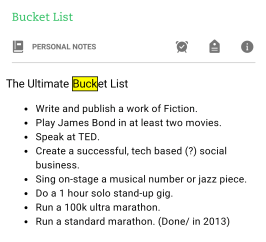
It’s something you should do / a bucket list thing

When I was growing up, I probably spent more time at libraries, than I did anywhere else. This might be sad, but I’m pretty okay with it. It established the notion that writing something big and complicated is something you do, so it’s one of the top things on my bucket list, as it should be on yours. Everyone should at least attempt long-form writing, if only to appreciate the effort involved in writing a book.

It will improve your writing

Thinking about writing and doing more writing will improve your writing. Simple. By actively engaging in creating content, you’ll gain a better understanding of all aspects of communication, which will greatly benefit everything else. From understanding subtext in fiction, to writing more engaging cover letters, or chat flirting with that new hottie at the office. Words always matter.

You get to share your unique point of view

Everyone has a story to tell, whether personal or professional, fact or fiction, epic or intimate, there is always something to share. It is your unique perspective, your individual take on a subject is what makes your story interesting. Your chosen topic is one thing, but how you explain, what literary devices you utilize to accomplish your goal, your twists on the established themes are among others what make your story truly unique..

Your parental units will be proud

What mother / father / legal guardian wouldn’t be proud of you? It doesn’t matter if you never sell it, they will still be proud of you. And if not, you should probably have a talk like the one above. Just saying….

And full disclosure, I have never completed a NaNoWriMo challenge. 5 years running I have never gone beyond 33.000 words (though my updated total is less). But I still learned a lot from those failures, and those learning points have henceforth informed my writing and ability to produce content more consistently. I will do a follow up post with tips and links to help you complete a NaNoWriMo. Lets do this together. 🙂

This concludes part one. Part two will be up in two weeks time. Brace yourselves for that.
But what do you think? Is NaNoWriMo an interesting project for you? Let me know.

And now… The NaNoWriMo song.

Out in the world (writing)

SONY DSC
Light and stylish!

At the time of writing, I am literally throwing stuff into bags and suitcases, missing it by mere meters, then picking it back up, folding it nicely and wondering why the hell I would be throwing anything into a suitcase. Pack nicely and thou shall be rewarded with nicer clothing and less broken gadgets. I’m heading to Budapest for some rest and relaxation, but hoping to get some writing in (like a few blog posts and other creative outlets). Continue reading Out in the world (writing)

The Problem of the Charge

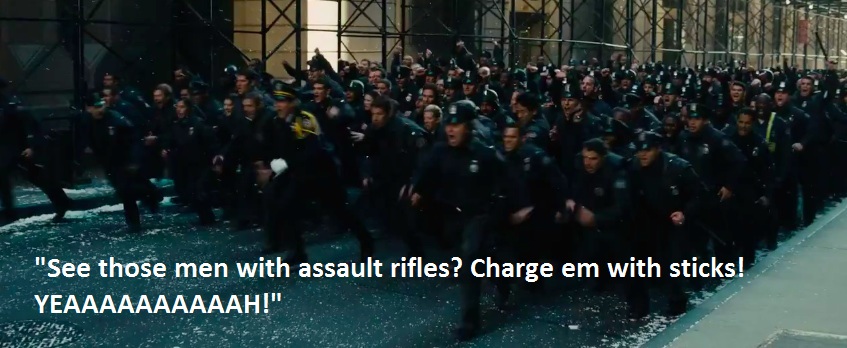
“See the enemy? It’s that group over there. They are armed with high-powered, long-range weapons, and they are trained to use them. But we know a great secret! The secret of The Charge. Yes, we shall assemble our forces in a large concentrated mass, and charge them head-on! And win!” 

charge_blogpost_darkknightrisesSaid no military commander after World War I (unless in a very specific situation where the enemy is completely unequipped to handle it), however every Hollywood director with a boner for the classic cavalry charge did. And sure, as a shock tactic utilized by a well-trained military force this can still work in real life. But in movies (and some books), it’s still viewed as the great equalizer. The opposition might be stronger, but our hearts and minds will prevail over their physical strength. Sorry… Skill beats will every time. Continue reading The Problem of the Charge

Wanted: Script Sceptic

Sorry for the break between posts. Life seems to be throwing un-catchable curve balls covered in goo and rusty nails these days, but I aim to get a post up every two weeks from now on. Even if the next ball makes me move countries. Who knows…. Here we go:

Everything in writing.
Get Everything in  Writing. Seriously.

Hollywood movie makers need to implement a new position in their production team. I would suggest calling it Script Sceptic but BS Manager would be more accurate. We’ve all experienced it. When going to watch the latest blockbuster to come out of the Wood, we accept that some suspension of belief is necessary and acceptable for the experience. It’s OK that the hero can survive some improbable event, that the odds of character A and character B meeting in that city with those people at the time is unlikely, but a properly constructed narrative will keep the suspension active. Continue reading Wanted: Script Sceptic

Three Things a Novel Should Never Do

Nothing throws me off reading a work of fiction than poor writing. Of all the crap you throw at a reader, the following three are probably among the worst literary sins I can imagine.

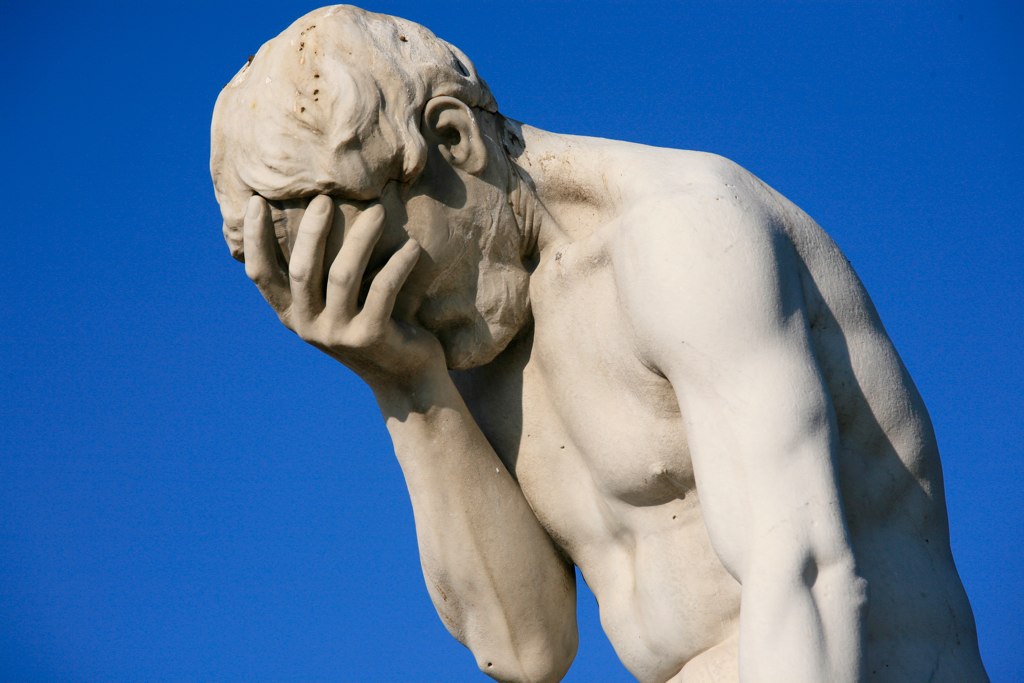
Facepalm
Even statues facepalm at bad writing. From Tuileries Gardens, picture from Wikipedia.

Point Number 1: Be Totally Predictable

A novel should never be predictable. Of course, there are genre conventions to be taken into consideration, expectations to certain themes or types of narratives, series of actions and developments that are inevitable or cannot reasonably be changed without serious changes to established reality or continuity. Continue reading Three Things a Novel Should Never Do

Writing Challenges

keep-calm-and-continue-writing-39I recently incorporated a Daily Writing Challenge to boost my creativity and daily output. And yes, I apologize for the lack of posts since Christmas, but personal issues, travel and reevaluating the direction of my life kinda took up a lot of time and energy, so the blog went on the back burner for a while. That while ended today.The concept of a Daily Writing challenge is to try and work with as many aspects of the written word as possible, to gain insight into different perspectives,prose, genre and sub genres, types of narratives, with the purpose of building skill, understanding and enhancing the creative juices. Continue reading Writing Challenges

The Muse Myth

20131130_145519_Richtone(HDR)
Click me for inspiration!

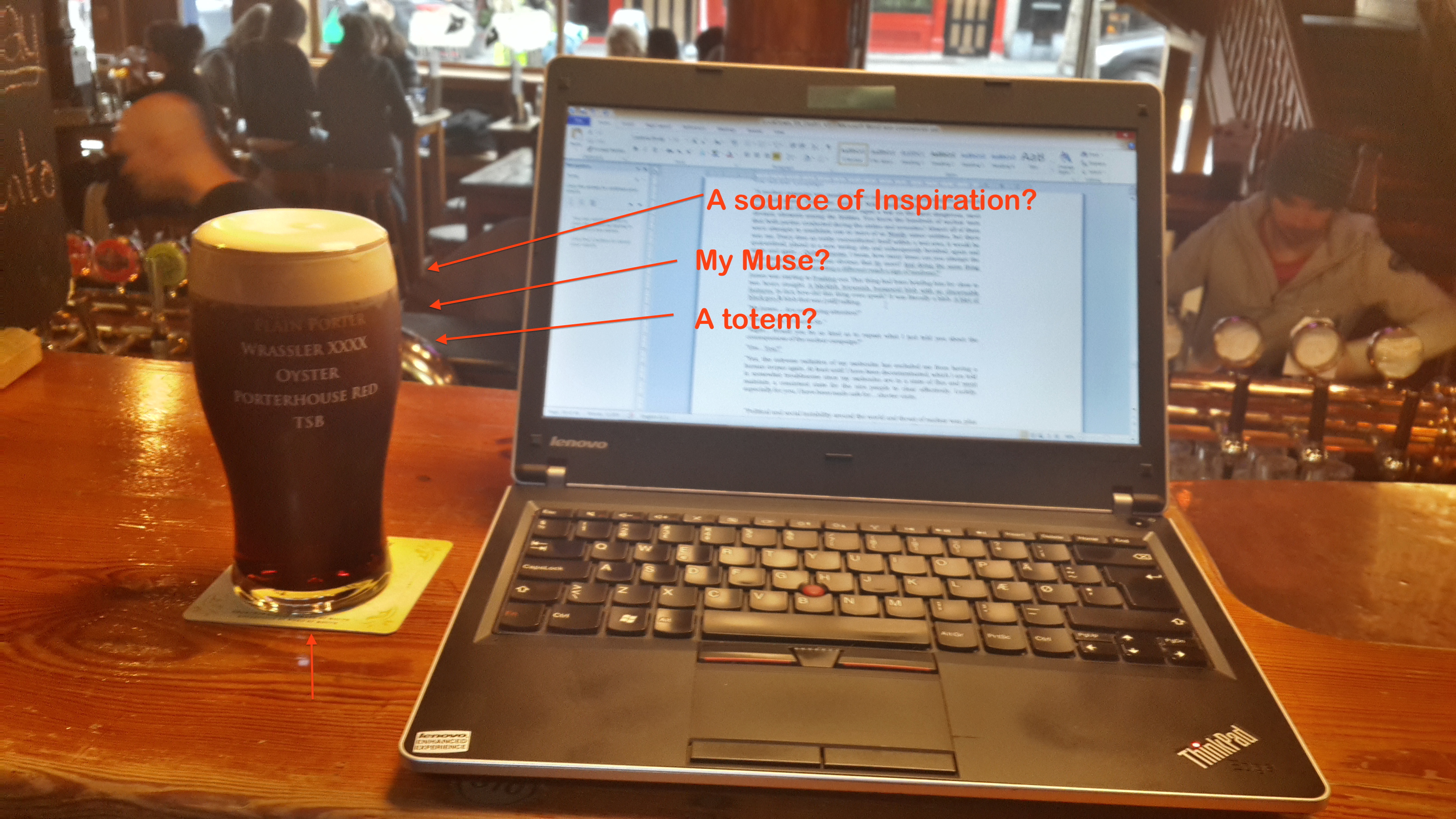
I recently met someone who considered the idea of being able to write creatively on demand, i.e. without being inspired, at set times or in any (reasonable) location, was somehow wrong. Not only that it is impossible to attain the correct “attitude” or “mindset” to writing, but that creativity is something more esoteric that flows into you when you least expect it. And by now I know, that is simply not the case. There is no real secret to writing. Sure, there is research to be done, structure to be built and writing blocks to be destroyed with giant metal hammers infused with the souls of old typewriters; but the act of creating a work of fiction, an article or a proper blog post comes out of the writer’s knowledge, experience and skill. And you can build those. Continue reading The Muse Myth