Category Archives: Writing

Your Personal Living Book, The Zibaldone – Or Why Journaling is Good for You.

I have recently been reading The Notebook: A History of Thinking on Paper by Roland Allan. And because of it I have become enamored with the idea of maintaining a zibaldone (Italian for “a heap of things”), which is a combination of a notebook and a journal. A typical zibaldone, if you can claim such a thing exists, would accommodate anything the user found useful: a list of tasks, a text on engineering, use it as day planner, or to build a practical resume, and whatever else the owner treasured. Typically it would contain a wide variety of vernacular texts the writer considered worthwhile enough to write themselves or choose to copy. While most have been lost, those that have survived have given us unique insight into their cultural identity and sense of the world.
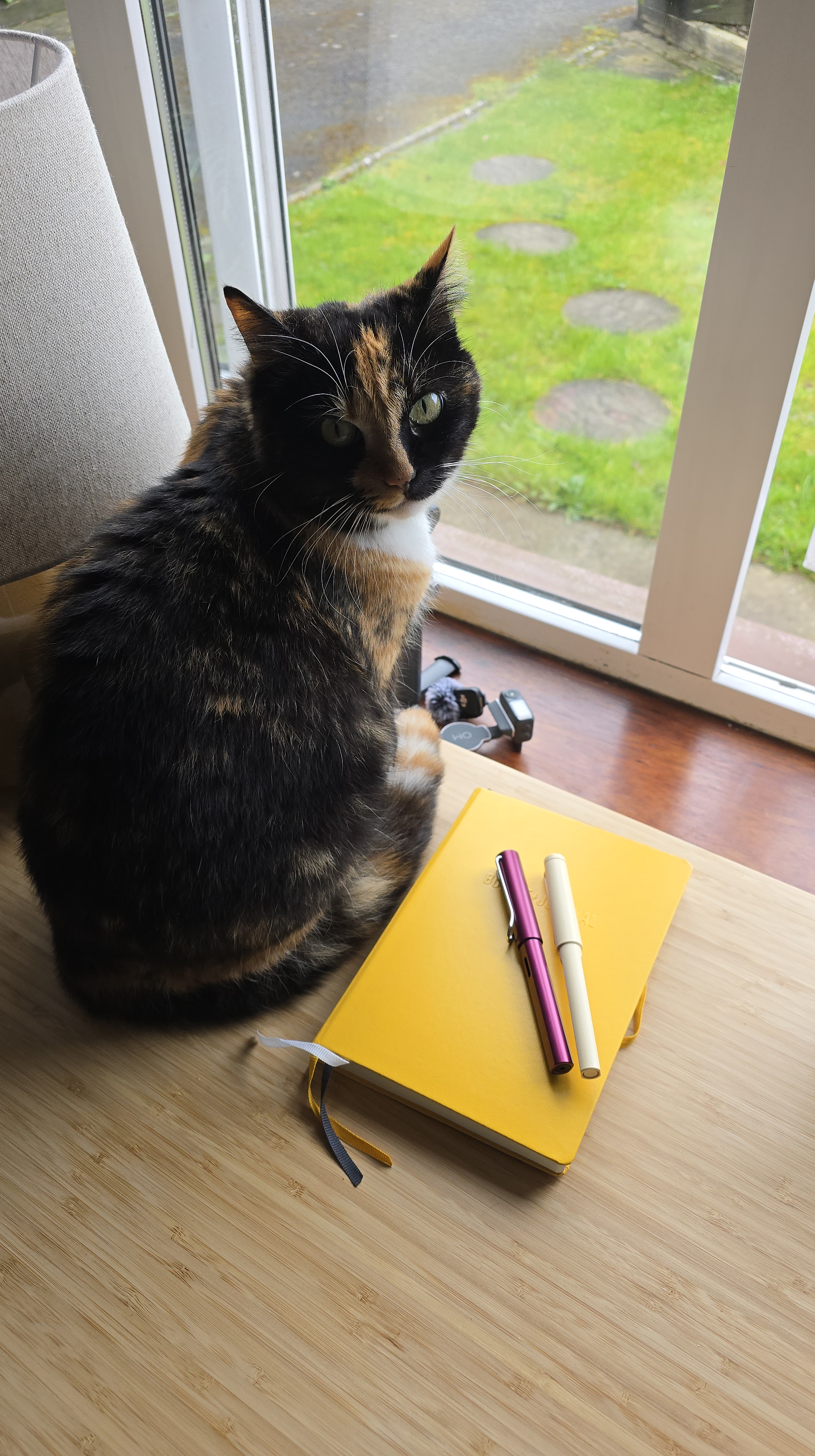
Journal / Zibaldone pictured. Neighbor’s nosy cat for scale.

Historically any material that the owner deemed particularly valuable or beautiful, like poems, bible verses or parts of stories were copied, often verbatim, which is how we have observed the spread and popularity of specific pieces. And while what we know is hardly complete, we have found copies of parts of the Divine Comedy and many religious prayers that were shared widely and we know this because of the large corpus of surviving zibaldoni (plural of zibaldone) that have been examined.

Practical works such as mathematical theorems or navigational observations were copied for their value as knowledge. Even theories about the nature of the universe, or philosophical concepts were found, and of course, the writers would add their own interpretations giving researchers a glimpse into what commoners were thinking at the time. 

This makes a zibaldone a living book, constantly edited, refined and expanded as the need arose. In some cases they became part heirlooms, passed down through generations for decedents to continue working in. It’s fair to argue that the adoption of the zibaldone did the heavy lifting for how we use paper today, from note taking to writing novels to artistry in general, making writing the purview of everyone.

Historically the zibaldone is attributed to Florence as one of the centers of paper making in the thirteenth century, but similar examples can be found throughout the region. n a time where literacy was limited in Europe (approx. 20 percent on average), Florence (and many surrounding parts) sported unheard of literacy rates, closer to 70 percent, largely attributed to a culture of writing and copying texts. In terms of raw popularity the zibaldone is unmatched for the time.

Leonardo da Vinci is likely the most famous and prominent user of zibaldoni maintaining dozens on diverse subjects such as crane designs, observations on water flow, painting with light and the study of horse legs, to mention just a few. A large corpus of these volumes survived until this day. Many of his famous sketches of flying machines or pump designs come from this personal library. Amusingly, he had a penchant for drawing caricatures which appear in many of his zibaldoni, though little is known about the individuals.
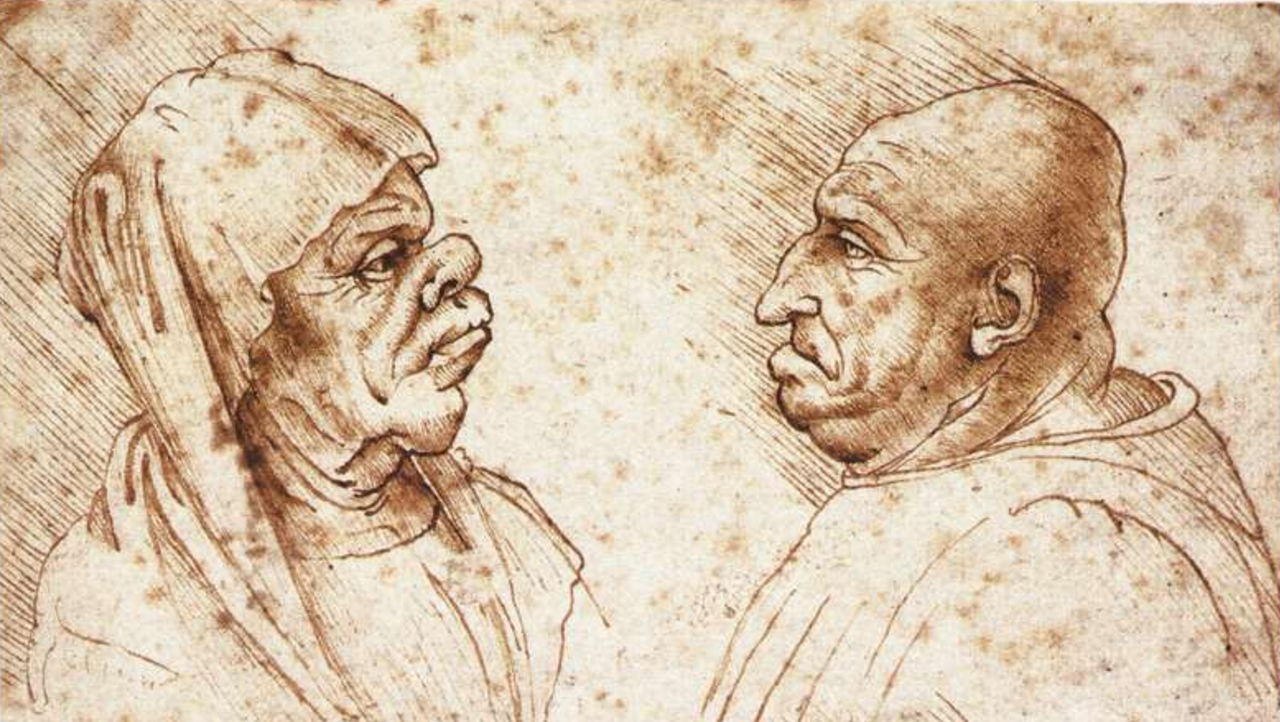
An example of Leonardo’s caricatures.

And while today many have transferred written activities to the digital realm, there are many reasons to keep a paper zibaldone, or journal as my wife insists on calling it. For one, a random solar flare won’t wipe out your property, nor will your content become unavailable if a tech company puts free features behind a paywall or train their AI on your deepest darkest feelings. Or because Cloudflare goes down again. I may sound cynical but the internet undeniably had it’s struggles lately. 

But why should you, a modern day human in the 21st century with access to all the bells and whistles of modern life, maintain a zibaldone? I will give you four reasons:

  • Disconnecting and slowing down

The main point of a zibaldone to me is slowing down and making observations about life, projects and anything in between. Having my morning brew, thinking about where I am going and visualizing how I get there has helped immensely, and also cut down on my doom scrolling significantly.

  • Permanence 

What I write down won’t just disappear, it’s real and tangible and Cloudflare won’t keep me from it. If it wasn’t obvious already, the whole Cloudflare debacle really bothered me. It was a very real showcase of just how much of my digital life is dependent on services and can just… go away without any warning or preamble.

  • Thinking on paper

I had this conversation with many people. What we write down in pen and paper gets processed differently in our brain than things typed into a smartphone. There seems to be a stronger link between writing out the words and formulating the idea on paper, which helps cognition, recognition and improves memory. Doing the same digitally does not have the same effect. So, use it for deeper thinking.

Please note: Bullet Journal offers a membership service, which I don’t use and know little about, but it is an interesting take on the subject if you happen to have one of their journals. 

Bullet Journal is one take of the idea of a living book. Over the years I have accumulated many unused notebooks (because they are pretty and useful and I never had the heart to defile them with my everyday ramblings), so when I found a pretty yellow one, it was naturally added to the collection and sat idle until an idea came along. 

To serve as a starting point, I use the Bullet Journal’s task managing format but tweaked it to my own proclivities. For example, I don’t put everyday to-do lists or shopping in my zibaldone. Instead I use it to track my writing and any other projects and to jot down ideas, big and small. Currently it serves as a writing assistant, for tracking my progress, managing my Beta readers (if you are reading this, you are amazing), taking notes on specific topics or ideas, and organizing tasks. I also have a page for random haiku. My hope is to evolve it over time to include thoughts on life events, deep thinking, and the odd creative piece.

Yes, it’s doodling. And more haiku.

Now, if you want to know about the Bullet Journal system, you can go here for the official version, or here for a more useful overview. 

If you follow me for the book updates, then the first complete draft is slated to finish this month. Thank you for your time. 
Leave a comment

Musings on Naming Conventions

Look, I’m not saying I am three beers in and struggling with this, but I am right now trying to decide if the names of my central characters should or shouldn’t be a direct reference to their central nature. For anyone familiar with history or generally with mythology would get any reference fairly easily and oh my, isn’t it fantastic that I hinted to the central nature of my character.

But is that really useful? Is it realistic? Is realism something I want to aim for?

This is what I’m musing over at the moment. Hinting at someones true nature is fun, but is it good writing? And its genuinely question I’m struggling with.

When I was young, I loved it when a character had a name that aligned with their destiny or their powers, it was very fun to discover, but as I got older its started to feel more and more like an obvious spoilers at best or, god forbid, pretentious at worst.

An example; in a story where we are searching for “The One”. We have three characters, Jim, Natasha, and Adam. Gee, I wonder if it could be Adam, the first man. And sure, its fun if its not the case, a red herring is another great narrative tool , but choosing one or the other does give certain narrative expectations.

Another thing to consider would be what associations we have with a certain name. Often if we need a mundane simple character, we name them Steve, or if we need someone to be a bitch, we name them Karen, or should we need a terrorist, we name him Muhammad. Its a sort of cultural shorthand, that name A equals attributes B, C, D.

But this cultural shorthand is far from universal and in most cases will have very limited longevity. Karen as an example is hardly more than 5 years old at this point and will become stale eventually.

So the more I delve into it, the harder it becomes to select a name that does and does not have meaning attached that is acceptable. And honestly, I’m curious what you think.

Anyway, one my characters right now is Arthur Cane. I’ll leave it up to your imagination what his deal is. You can add your thoughts below, both on the topic and on Arthur Canes true nature.

Thanks for reading. Inconsistent post to come eventually.

(c) Torben Jensen

NaNoWriMo 2016 is here – Time for Another Bout

2016-11-01-18-25-29Yes, I may have neglected the blog for months, but I did move countries, change my career path, injure my back and encounter the wonders of Belgian bureaucracy. All excellent distractions and apparently kept me too busy to remember that I had a blog (or several as it turns out) to write for. But now NaNoWriMo is back for 2016, so why not revive the blog in the flurry of activities we call the “Write 50.000 words and don’t have a heart attack” party that is NaNoWriMo in a nutshell.
This year is going to be a bit of an experiment. I will be writing my own work, the progress of which you can follow here and add me as a writing buddy, while simultaneously starting a collaboration with my partner, the very talented Andrea, to write our own contemporary fantasy murder mystery.

And I haven’t been entirely inactive since my last post. I started a sister blog that pokes fun at corporate vernacular, that I have thoroughly enjoyed compiling and creating content for. You can find here should such shenanigans tickle your fancy.

Anyway, I am off to frantically type out the opening scene for my NaNoWriMo 2016 project. Best of luck to everyone out there. And if you need a reason to participate, you can find 5 reasons right here!

But what do you think? Is NaNoWriMo worth the time and effort and stress and pain and fun and excitement and other feelings both good and bad? Let me know.

And now… The NaNoWriMo song.

A Scourge of Clickbait on Thee

16ooj0Why do people still engage with clickbait? Wait wait wait, hang on, let me rephrase that. Why do people persist in engaging with headlines that are obviously designed to appeal to our most basic level of curiosity, to our emotions, our greed and our sense of schadenfreude, instead of relying on our intellect and not giving it traction and traffic? Clickbait is a terrible thing. It’s objectively terrible. It promises a reader something life changing but instead gives you a hamster eating miniature burritos. Which is great in and of itself, but it’s hardly worth a line like “Chef cooks meal for his favorite hamster. What he cooks will blow your mind”.

A good headline is essential for attracting readership and clearly my own needs work, but for me a clickbait header is a de facto statement that you have nothing of value to offer me. It means you’re a scam, a fraud and you have nothing to say. A good headline is simple, informative and direct, leaving plenty of room to be creative and entertaining, and generally refrains from being too inane, deceptive and/or unnecessarily hyperbolic.

A clickbait headline includes a cliffhanger to bait the reader and an emotional trigger to push the reader to click. It deliberately excludes information you need in the decision process and nudges your curiosity bone Clickbait headlines are so lacking in content that you can make a headline clickbait generator. This one thrilled me with results like “19 Unusual Psychological Experiments That Can Be Explained By Duran Duran B-Sides” and “55 Life Hacks Only German Men Should Never Be Ashamed Of” which sound fascinating without giving me anything of substance. Clickbait reminds me of pop-up ads from the nineties or the phishing e-mails which occasionally grace my inbox. Bait the reader with A, then push to click B, get screwed by a conman C. Rinse repeat, appeal to simpler natures, make a profit. Unwanted and unneeded.

And that’s probably also the problem, it has become a numbers game. Get shares, likes, clicks, sneezes, whatever and hope your content (regardless of quality) goes viral so you make a profit on ad revenue or distributing swag or whatever floats your boat. The monetary incentive is strong and the market remains open to clickbaity content, to the extent that some major news outlets have used clickbaity headlines as a way of boosting traffic, apparently not understanding that it drives away more discerning audiences (like me).

And it’s interesting because on the other hand we do live in a (more) golden age of writing. And I mean that literally. More people than ever before have the ability to read and write, and the opportunity to publish their words of wisdom in whatever form, be it social media, print or laser print on cutting boards. The sheer volume of content is both forcing writers to be more creative and experimental in their work, and creating a need to sell. And what sells clicks are headlines and images. A strong, well crafted headline, usually paired with an image can make or break a piece of work. Timing, interest and some luck also plays a part in its virulence.

In short, please don’t propagate clickbait. It feeds a system where content takes second (or third or fourth or…) place in favor of clicks.

What do you think? Does clickbait have a role is modern writing, be it in blogging or journalism or something completely different? Or is it just utterly terrible pathos-based garbage? It is. It really is. But let me know if I’m wrong.

Let me know and do like, share and subscribe. Stay tuned!

Raison d’être

This is a response to The Daily Post’s weekly Discover challenge Raison d’être. And my partner asked me; why I choose to spend my time creating/writing and, since she’s doing a post on it here, I decided to write one myself. So why do I write, in my diary, on my book projects, on the blog series? What is my raison d’être? I don’t make a living out of it (yet), so it’s not about that. It took me a while to pin it down, as there isn’t a singular reason to my writing, but a multitude of interconnected and complicated reasons, many of which have only emerged over time, and through much deliberation. So let’s boil it down to five themes.

Building worlds and telling stories – I write stories. I like telling them. Whether it’s epic action sequences in aliens worlds, or three people chatting about the latest in-world politics, I love the creativity involved. Planning out the text, choosing what to embellish and what to cast aside, picking a viewpoint, tweaking it so it’s just perfect, etc. Whether it’s a short story challenge, a piece of nano fiction, working on my blog series, or my continual attempts at long-form writing, it’s all part of the course.

Dealing with life – Life can be grim. Disease, death, sexual abuse, etc. all exist and whether you like it or not, you will probably have to deal with it. I started using writing for dealing trauma initially when my parents divorced, then dealing with the loss of a family member, and later when I was a victim of abuse and violence. By writing it down I externalise it, then analyse the motivations to try and find out what went right or wrong (which is very much a stream of consciousness kind of thing), which has helped me cope with these experiences.

Thinking through a problem – Taking notes started as an attempt to distil the essence of an argument or a problem and then source verifiable data to prove or disprove it. I spent hours at university doing deep dives on various topics mostly for classes, but essentially for anything that tickled my fancy. This allowed me to form a defensible position on any subject. Too often people pick and choose their opinions without giving it sufficient thought. Part of my writing is figuring out what my position is and whether I can/want/choose to defend it.

Playing with words – This is often a matter of personal pride and satisfaction. Wordplay, puns, obscure references allows me to take delight in seeing a reader having ‘aha’ moments, a quiet snicker at something I created with my brain. That’s something powerful, something great, and should be appreciated.

Clearing my mind – Some people use yoga, others use mind-altering substances or use music to soothe their inner turmoil. I write. I write about my thoughts and ideas, I write stories and shorts, I write silly jokes and I write and I write and I write, and at some point my head goes quiet enough that my metaphorical demons can’t find me. And then I feel ok and can deal with the rest of my existence.

Or, if I have to put it succinctly: I write because I cannot not write.

Why do you choose write or paint or sculpt or whatever is your thing? Why do you choose to create rather than not create? Let me know.

NaNoWriMo was here – 2015 After Action Report

Screenshot 2015-12-01 20.45.35

You fail only if you stop writing.”

– Ray Bradbury

To me, this is the key to have a successful NaNoWriMo. Finishing the 50.000 words in one month, like I mentioned in my previous post, is less important than not to give up on your writing and to keep building the skill.. NaNoWriMo 2015 is over, so thank you for playing if you did. If you didn’t, then join us next year. It’ll be fun. I super promise.

In any case, this year has been quite a learning experience. For one, the world has been annoyingly distracting with work drama, life drama and terrorist drama around the world. But it has also been a productive November. Although I didn’t make it to 50.000 words on my story this year, but I did get a lot further than I thought. 28.000+ somewhat intelligible words have been added to my novel, not counting character bios, world notes, questions, outline and miscellaneous research, which is far beyond what I expected. I also learned that statistics are useless, if you’re not consistent with you counting and writing. I write in Word, Google Docs + Google Keep, in Scrivener and in a notebook. If I can give you one piece of tangible advice, DON’T DO THAT. Pick a tool and use it. That way you won’t get surprised on word count.

I also came up with a new creative project for the blog: a weekly series that I’ll start the first week of January, and also have fun titles for several books in potentia. And jokes, I wrote a lot of bad jokes. So all in all, I’m very positive and looking forward to write more.

And should you need another famous quote on writing, then:

There is nothing to writing. All you do is sit down at a typewriter and bleed.”

– Ernest Hemingway

So back to bleeding daily. But what do you think? Was my November wasted or worth it?
Did you do NaNoWriMo and finish? (if so, well done!). Let me know!

And for the last time is 2015… The NaNoWriMo song.

NaNoWriMo is here – I got distracted

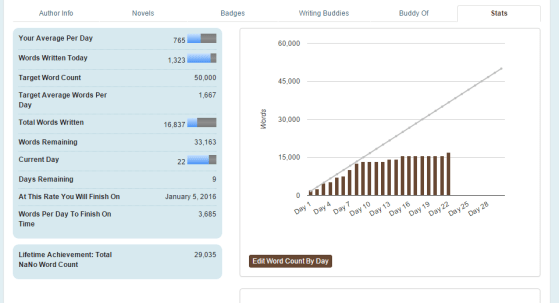
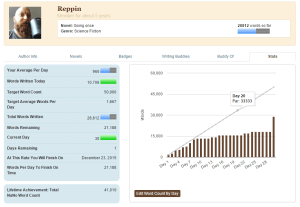
That’s life isn’t it. You set a goal, make a plan to get there, get your hopes up, then NaNoWriMo kicks off, and you immediately get distracted, the plan gets shot down, you adapt, you improvise, get distracted again, make small concessions to your goal, adapt some more, realize that it’s harder than you remembered, make bigger concessions, sob in misery and despair, wipe away your tears, and then suddenly it’s day two. Or five. Or ten. Or as it turns out; day twenty-two.

Screenshot 2015-11-22 12.36.32
Current word count

And I’m in fact behind on my word count. And that’s okay. And if you’re behind, that’s okay too. It would be nice to be able to say that I wrote a novel in a month and be looked at with awe, get showered with compliments, beer and sandwiches, but in reality that’s not the case. And that’s okay. This is the main point of this post: it’s okay to fail at NaNoWriMo.

Because what we’re building is a writing skill, with writing habits and a trust in our ability to put pretty words on a page and/or screen. We can worry about deadlines when we have actual paying jobs as writers.

2015-11-22 12.29.40
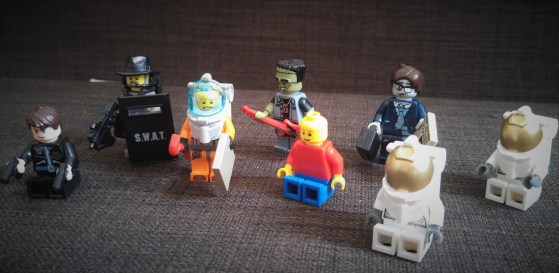
Not representative of actual cast. Clearly.

So if you’re like me, take stock and make a sensible plan for the rest of November, and then focus on solidifying that skill past November. Currently I have 17.000(ish) words down, a solid outline for act one and two with notes on act three, a list of named characters with their internal relationships mapped out, and nine writing days to go. My goal for this last period is to exceed 25.000 words, which means I need to put out 600 words a day. It’s manageable and will give me that nifty badge on my profile.

And then the work goes on. You keep working on your habit, your skill, and soon you’ll have a novel done. Or you’ll kill it and start something else. Or stop because you hate it. And all of those are OK.

But what do you think? Did I waste my November? Let me know.

And now… The NaNoWriMo song.

NaNoWriMo is Here – Time to Get Started

Screenshot 2015-10-07 21.24.59And here we go! Its NaNoWriMo time and I just wanted to share my plan for this year. I will have chosen to work on two projects, both in Scrivener, my main project being a near future Scifi novel with a fictional diary as my backup project, just in case I lose momentum on the novel. I often get distracted from my main project, simply because writing stimulates my creative centre and makes all the good ideas come out at the same time. Or at least, I think they are all good ideas. 🙂

I will get my 50.000 words in this time, even if I have to share it between to two projects. I will be updating my word count daily on my NaNoWriMo page, which you can fine here. If you wanna add me as a writing buddy, feel free to do so. I will be doing an after action post, detailing what progress I made and how this year was the best NaNoWriMo year (I hope)

And most importantly, good luck and happy wrting.

But what do you think? Am I wasting my November chasing a fickle fantasy? Let me know.

And now… The NaNoWriMo song.