I have recently been reading The Notebook: A History of Thinking on Paper by Roland Allan. And because of it I have become enamored with the idea of maintaining a zibaldone (Italian for “a heap of things”), which is a combination of a notebook and a journal. A typical zibaldone, if you can claim such a thing exists, would accommodate anything the user found useful: a list of tasks, a text on engineering, use it as day planner, or to build a practical resume, and whatever else the owner treasured. Typically it would contain a wide variety of vernacular texts the writer considered worthwhile enough to write themselves or choose to copy. While most have been lost, those that have survived have given us unique insight into their cultural identity and sense of the world.
Historically any material that the owner deemed particularly valuable or beautiful, like poems, bible verses or parts of stories were copied, often verbatim, which is how we have observed the spread and popularity of specific pieces. And while what we know is hardly complete, we have found copies of parts of the Divine Comedy and many religious prayers that were shared widely and we know this because of the large corpus of surviving zibaldoni (plural of zibaldone) that have been examined.
Practical works such as mathematical theorems or navigational observations were copied for their value as knowledge. Even theories about the nature of the universe, or philosophical concepts were found, and of course, the writers would add their own interpretations giving researchers a glimpse into what commoners were thinking at the time.
This makes a zibaldone a living book, constantly edited, refined and expanded as the need arose. In some cases they became part heirlooms, passed down through generations for decedents to continue working in. It’s fair to argue that the adoption of the zibaldone did the heavy lifting for how we use paper today, from note taking to writing novels to artistry in general, making writing the purview of everyone.
Historically the zibaldone is attributed to Florence as one of the centers of paper making in the thirteenth century, but similar examples can be found throughout the region. n a time where literacy was limited in Europe (approx. 20 percent on average), Florence (and many surrounding parts) sported unheard of literacy rates, closer to 70 percent, largely attributed to a culture of writing and copying texts. In terms of raw popularity the zibaldone is unmatched for the time.
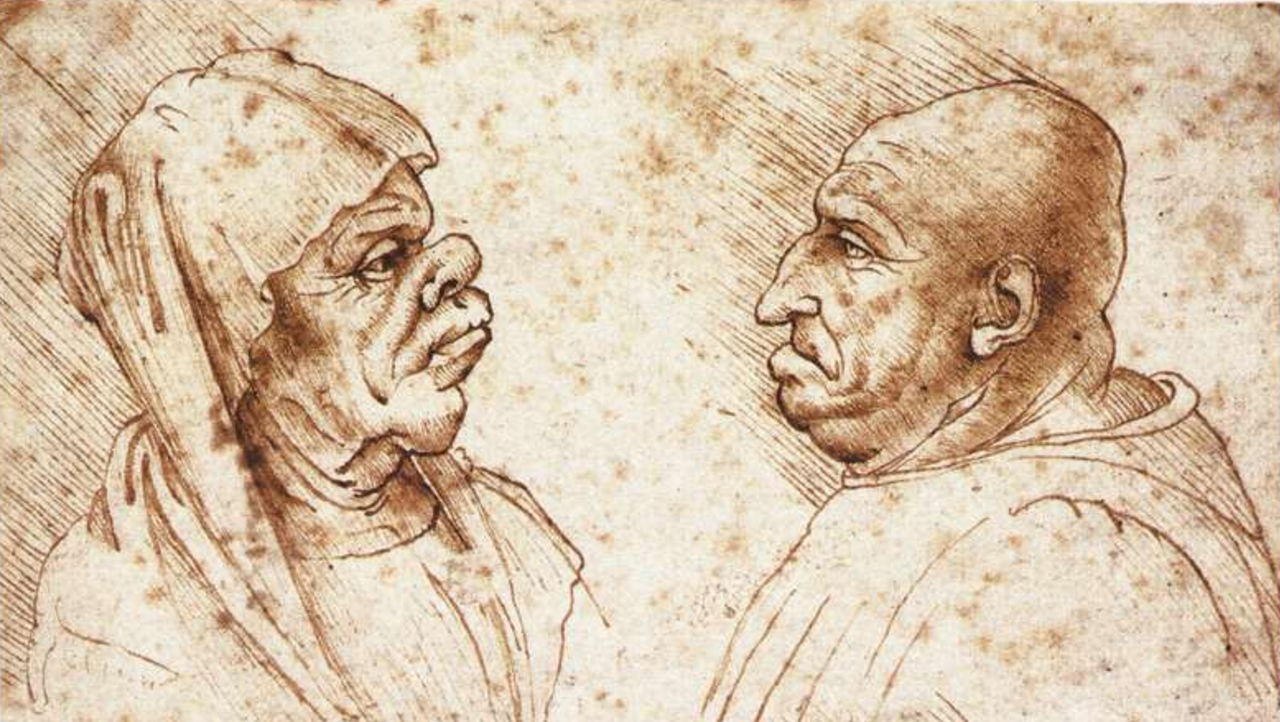
Leonardo da Vinci is likely the most famous and prominent user of zibaldoni maintaining dozens on diverse subjects such as crane designs, observations on water flow, painting with light and the study of horse legs, to mention just a few. A large corpus of these volumes survived until this day. Many of his famous sketches of flying machines or pump designs come from this personal library. Amusingly, he had a penchant for drawing caricatures which appear in many of his zibaldoni, though little is known about the individuals.
And while today many have transferred written activities to the digital realm, there are many reasons to keep a paper zibaldone, or journal as my wife insists on calling it. For one, a random solar flare won’t wipe out your property, nor will your content become unavailable if a tech company puts free features behind a paywall or train their AI on your deepest darkest feelings. Or because Cloudflare goes down again. I may sound cynical but the internet undeniably had it’s struggles lately.
But why should you, a modern day human in the 21st century with access to all the bells and whistles of modern life, maintain a zibaldone? I will give you four reasons:
- Disconnecting and slowing down
The main point of a zibaldone to me is slowing down and making observations about life, projects and anything in between. Having my morning brew, thinking about where I am going and visualizing how I get there has helped immensely, and also cut down on my doom scrolling significantly.
- Permanence
What I write down won’t just disappear, it’s real and tangible and Cloudflare won’t keep me from it. If it wasn’t obvious already, the whole Cloudflare debacle really bothered me. It was a very real showcase of just how much of my digital life is dependent on services and can just… go away without any warning or preamble.
- Thinking on paper
I had this conversation with many people. What we write down in pen and paper gets processed differently in our brain than things typed into a smartphone. There seems to be a stronger link between writing out the words and formulating the idea on paper, which helps cognition, recognition and improves memory. Doing the same digitally does not have the same effect. So, use it for deeper thinking.
Please note: Bullet Journal offers a membership service, which I don’t use and know little about, but it is an interesting take on the subject if you happen to have one of their journals.
Bullet Journal is one take of the idea of a living book. Over the years I have accumulated many unused notebooks (because they are pretty and useful and I never had the heart to defile them with my everyday ramblings), so when I found a pretty yellow one, it was naturally added to the collection and sat idle until an idea came along.
To serve as a starting point, I use the Bullet Journal’s task managing format but tweaked it to my own proclivities. For example, I don’t put everyday to-do lists or shopping in my zibaldone. Instead I use it to track my writing and any other projects and to jot down ideas, big and small. Currently it serves as a writing assistant, for tracking my progress, managing my Beta readers (if you are reading this, you are amazing), taking notes on specific topics or ideas, and organizing tasks. I also have a page for random haiku. My hope is to evolve it over time to include thoughts on life events, deep thinking, and the odd creative piece.
Yes, it’s doodling. And more haiku.
Now, if you want to know about the Bullet Journal system, you can go here for the official version, or here for a more useful overview.
If you follow me for the book updates, then the first complete draft is slated to finish this month. Thank you for your time.
 Torben Jensen